
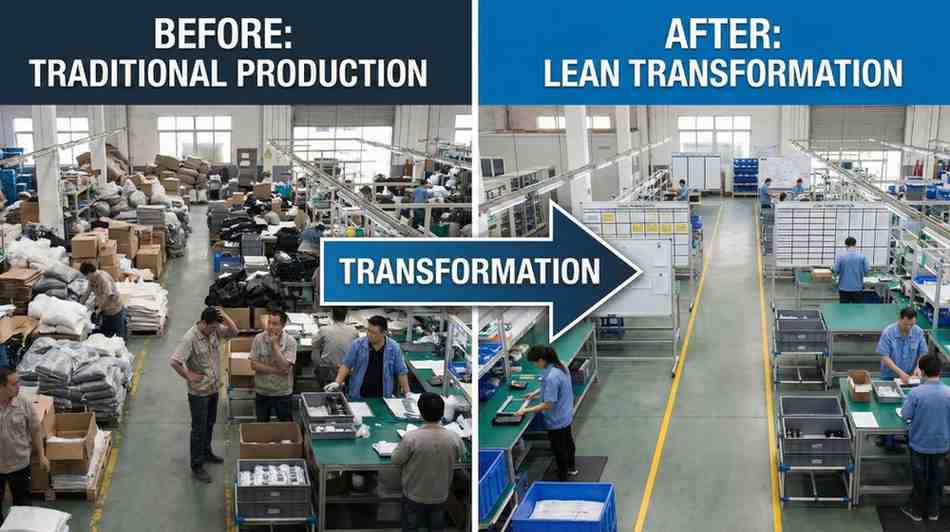
Gemba Walk Checklist: What to Observe and How to Act
A practical checklist for conducting effective Gemba walks. Learn what to observe, what questions to ask, and how to turn observations into improvement actions.
A practical checklist for conducting effective Gemba walks. Learn what to observe, what questions to ask, and how to turn observations into improvement actions.
Gemba walks are simple in concept and powerful in practice — but only when they are done with discipline and follow-through. A poorly executed Gemba walk is worse than no walk at all, because it signals to teams that leadership is going through the motions rather than genuinely engaging with the work.
This checklist provides a structured approach for planning, conducting, and acting on Gemba walks. Whether you are new to Gemba or want to sharpen an existing practice, these guidelines will help you get more value from every visit.
Before the walk: preparation
Choose a focus area. Do not try to observe everything at once. Select a specific theme for each walk: flow and waiting, quality and rework, standard work adherence, visual management effectiveness, or safety. Having a focus directs your attention and makes your observations more actionable.
Review recent performance data. Before you go to Gemba, look at the relevant metrics for the area you will visit: output, quality, delivery, safety incidents. This gives you context without biasing your observations. You are looking for the gap between what the data shows and what you observe in reality.
Plan your route. Walk the process in the order work flows. Start at the beginning of the value stream (or the customer end) and follow the work through each step. This helps you see handoffs, queues, and wait times rather than just individual workstations in isolation.
Schedule enough time. A meaningful Gemba walk takes 30 to 60 minutes. Rushing through defeats the purpose. Block the time in your diary and protect it.
During the walk: what to observe
Flow. Is work moving smoothly from one step to the next, or is it stopping, waiting, and accumulating? Look for queues of work-in-progress between steps. Ask: why is this work waiting here? How long does it typically wait?
Standard work. Are people following the documented standard, or have they developed workarounds? If the standard is not being followed, the question is not why people are deviating — it is what is wrong with the standard that makes deviation necessary.
Visual management. Are the visual boards up to date? Are they being used in daily meetings? Can you tell the status of work at a glance? Visual management that is not maintained is worse than no visual management, because it teaches teams that standards do not matter.
Safety and ergonomics. Are there hazards? Is the workplace organised? Are people having to strain, reach, or move unnecessarily? Safety issues are often efficiency issues too.
People. Are people engaged in their work? Are they struggling with anything? Do they have what they need? The most valuable observations often come from brief conversations: what is the biggest challenge you face today?
Questions to ask at Gemba
The best Gemba questions are open-ended and curious. Avoid leading or judgemental questions. Here are effective Gemba questions:
What makes your work difficult today? What does your normal day look like? Where do you see the most waste in this process? What would you change if you could? Is there anything you need that you do not have? What training would help you most? How does work arrive to you — is it predictable or unpredictable? What happens when something goes wrong — how do you escalate?
Listen to the answers. Take notes. Resist the urge to solve problems on the spot. Your role at Gemba is to observe and understand, not to direct and fix.
After the walk: turning observations into actions
Review your notes within 24 hours while the observations are fresh. Categorise them: quick fixes (can be addressed immediately), improvement opportunities (require analysis and action planning), and systemic issues (require escalation or broader investigation).
Share your observations with the team. Thank them for their input. Be transparent about what you observed and what you plan to do about it. If something cannot be addressed immediately, say so and explain why.
Create specific actions with owners and dates. Track these actions visibly — on the team's performance board or a dedicated Gemba action tracker. Follow through. Close the loop.
Build the habit. Gemba walks are only effective when they are regular. Schedule them in your diary. Hold yourself accountable. Most leaders who abandon Gemba walks do so because they let other commitments take precedence. The irony is that Gemba time is the most productive time a leader can spend — it just does not feel that way when you have a full inbox.
Gemba walk frequency guide
For frontline leaders: daily, 15 to 30 minutes. For middle managers: two to three times per week, 30 minutes. For senior leaders: weekly, 30 to 60 minutes. For executives: monthly, with a specific focus theme.
These are guidelines. What matters more than frequency is consistency and follow-through. A weekly walk with diligent follow-up is worth more than daily walks with no action.
If you want to embed effective Gemba practices in your leadership team, we can help. Book a discovery call to discuss how Gemba coaching could strengthen your operational management.

About the author
Audrey Nyamande
Founder, Tacklers Consulting Group
Audrey is a Lean Six Sigma certified aerospace engineer and transformation coach. She has led improvement programmes in high-stakes engineering, manufacturing, and MRO environments across the UK, helping organisations reduce waste, protect expertise, and build capability that lasts.
View speaker profile: Global Lean Summit 2026Learn more about our teamNext steps
Turn insight into practical operational gains
If this topic matches your current priorities, explore our service pathways or book a focused discovery call.
Further reading
Explore our insights
Leadership
Lean Leadership Principles for Operational Managers
Lean leadership is not about tools — it is about how leaders behave, coach, and create the conditions for teams to improve. Learn the core principles every operational manager needs.

Operational Excellence
Operational Excellence Framework: How to Build One That Holds
An operational excellence framework provides the structure for sustained performance improvement. Learn how to design one that aligns strategy, processes, people, and management routines.
Lean Tools
How to Reduce Rework in Production: A Practical Approach
Rework is one of the most expensive forms of waste in production environments. Learn a structured approach to identifying root causes and building quality in at source.
Industry Insights
Lean Manufacturing in the UK: A Practical Guide
UK manufacturing faces persistent productivity challenges. Learn how Lean principles drive measurable improvement in production flow, quality, and delivery reliability.